The International Council of Women is the first truly global women’s NGO which was founded in 1888 for the advancement of women all over the world
Genesis
Ever since its establishment, the organization has been at the forefront of bringing worldwide attention to the issue of women’s rights and leading the battle against gender based social injustice.
In that sense, the ultimate goal is the creation of a happier, safer and more egalitarian world for all.
During the second-half of the 19th century, the emergence of industrial societies in Europe and America contributed to the formation of a range of social movements.
Among these movements, an awareness of gender based discrimination and injustice in virtually all aspects of society began to emerge. Well educated, insightful, determined women began to press for the formation of specific associations to advocate for equal rights which would lead to improved status and better living standards.
ICW, founded in 1888 in Washington D.C., coincided with the establishment of the first national council, the National Committee of the United States.
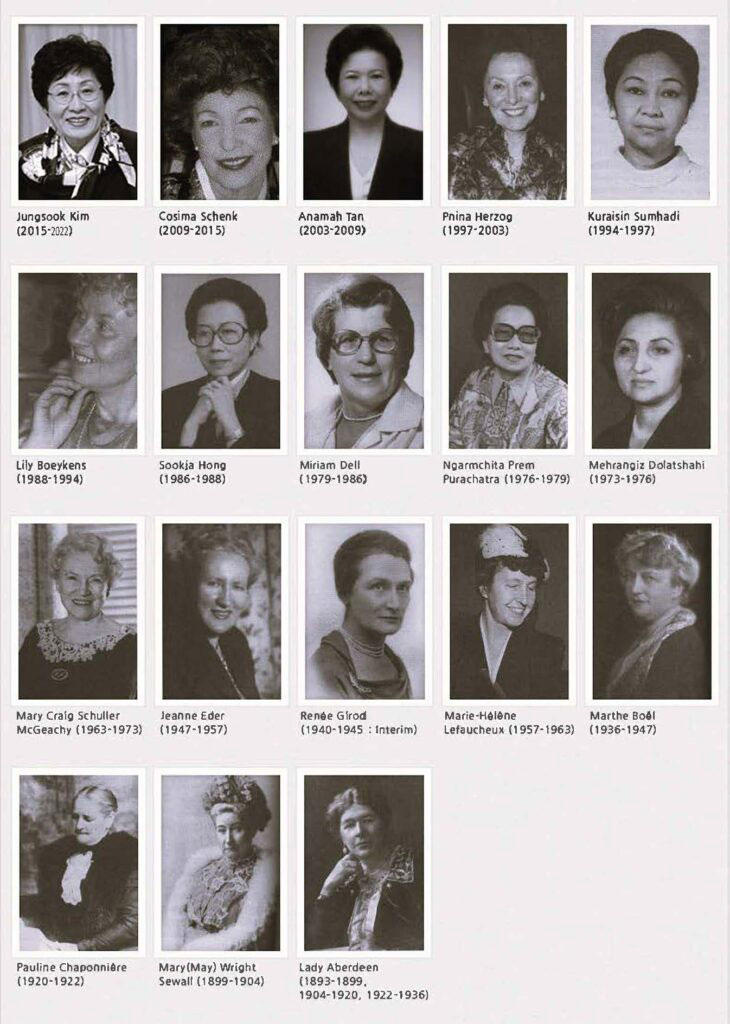
Founding members included Susan B. Anthony, May Wright Sewall, and Frances Willard, among others. Fifty-three women’s organizations from nine countries were represented at the first gathering.
ICW’s aim is to bring together women’s organizations from all countries.
The goal is to promote human rights, equality, peace and women’s involvement in all spheres of life through the establishment of an international federation, or umbrella organization, of National Councils. Only one council is admitted for each country.
Where Women’s Voices Shape the World
The International Council of Women (ICW) is deeply anchored within the global architecture of international governmental organizations.
Across 138 years, ICW has earned and preserved a remarkable reputation for professionalism and leadership—first within the League of Nations, and later at the very heart of the United Nations system.
From the earliest days of the League of Nations, ICW championed a principle that would shape the future of global governance: the equality of women and men.
This unwavering commitment placed ICW in a position of strength in 1945, when the United Nations was founded and the Commission on the Status of Women was created. Through the determined efforts of ICW and other women’s NGOs, gender equality became a universal value embedded in the mission of the United Nations.
With the establishment of the UN, ICW became one of the first NGOs to attain general consultative status with multiple UN agencies—a recognition of its influence, expertise, and enduring dedication to the advancement of women worldwide.
Apolitical and neutral international organization
From its very beginning, the International Council of Women (ICW) has stood firm as an apolitical and neutral global organization.
Our vision of feminism is expansive and inclusive—driving transformative change across all areas of life to secure greater dignity, harmony, and opportunity for every woman.
ICW’s commitment reaches far beyond reducing political, economic, or civil inequalities.
We strive to elevate the moral and human foundations of society itself, working to build a world where women and children can live in safety, freedom, and fulfillment.
At the heart of our mission lies an unwavering belief:
that well-being, happiness, and justice are universal rights. These shared aspirations unite women regardless of social status, ethnicity, or religion—and they continue to guide and empower our work across the globe.
International Engagement and Global Impact
From its earliest years, the International Council of Women (ICW) understood that building connections across borders was essential to building peace.
Today, our worldwide network embodies powerful intercultural dialogue and cooperation—key pillars for global stability and security.
ICW stands on a simple truth: women everywhere deserve equality, dignity, and freedom from violence and discrimination.
Across all nations, women still confront trafficking, poverty, and systemic injustice. This reality drives our international action every day.
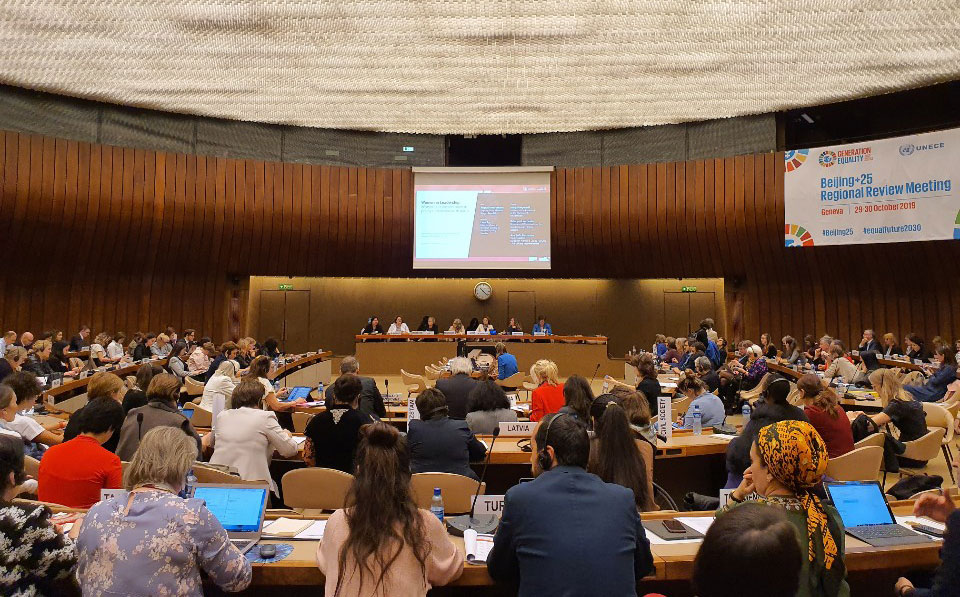
ICW played a decisive role in the UN’s proclamation of the International Women’s Year (1975) and has been a strong voice in every World Conference on Women—from Mexico City to Beijing. We have worked relentlessly to make gender equality a universal standard, shaping global policy, mobilizing public opinion, and advancing the MDGs and SDGs.
Today, ICW continues its close collaboration with the United Nations on critical issues: women’s rights, education, health, peacebuilding, migration, climate, violence prevention, and the protection of children, refugees, and minorities.
The work is far from over.
At the 2025 General Assembly in Marrakech, ICW adopted its new triennial theme:
“Women’s Empowerment and Leadership: A Quantum Leap for Peace, Progress and Equality.”
Across the globe, National Councils of Women are launching initiatives to strengthen female leadership and transform communities.
Our mission moving forward is clear: bring the power of women’s empowerment to every place where inequality still persists.
Our Partners